.svg)
.png)
.svg)
.svg)
.svg)


A brand moodboard is the first step in translating your brand’s strategy into a visual language that feels authentic, memorable, and consistent. Whether you’re launching a new business or refreshing an existing identity, a branding moodboard helps define the mood, style, and overall direction of your brand.
At INSAIM, we believe that the visual identity should never be created in a vacuum. It should be rooted in the brand’s positioning and strategy, and it should communicate the brand’s character in a way that feels both intentional and well-rounded.
What Is a Brand Moodboard?
A brand moodboard is a curated visual tool that brings together color, typography, imagery, textures, and graphic elements to define a brand’s visual direction. It’s not a final design — it’s the foundation that guides every design decision that follows.
A strong branding moodboard answers questions like:
- What should the brand feel like?
- Who is the brand speaking to?
- What emotions should it evoke?
- What makes the brand different?
In other words, it’s the visual translation of your brand positioning and strategy.
Why a Brand Moodboard Matters
Before any logo, website, or marketing asset is created, the moodboard sets the visual rules. It prevents inconsistent design choices and ensures that all future materials align with the brand’s core identity.
A brand moodboard helps:
- Align teams and stakeholders
- Reduce unnecessary revisions
- Establish a consistent visual system
- Ensure the brand feels cohesive across all platforms
MoodBoard Template: Examples
At INSAIM, we create moodboards that capture brand character and translate it into a clear visual language. A complete moodboard usually includes 30–40 references — below are shorter excerpts that illustrate the process.
Sensations
This section defines the emotional tone of the brand — bold or refined, futuristic or human, minimal or expressive. Through keywords, textures, lighting cues, and color impressions, we communicate how the brand should feel, not just how it should look.
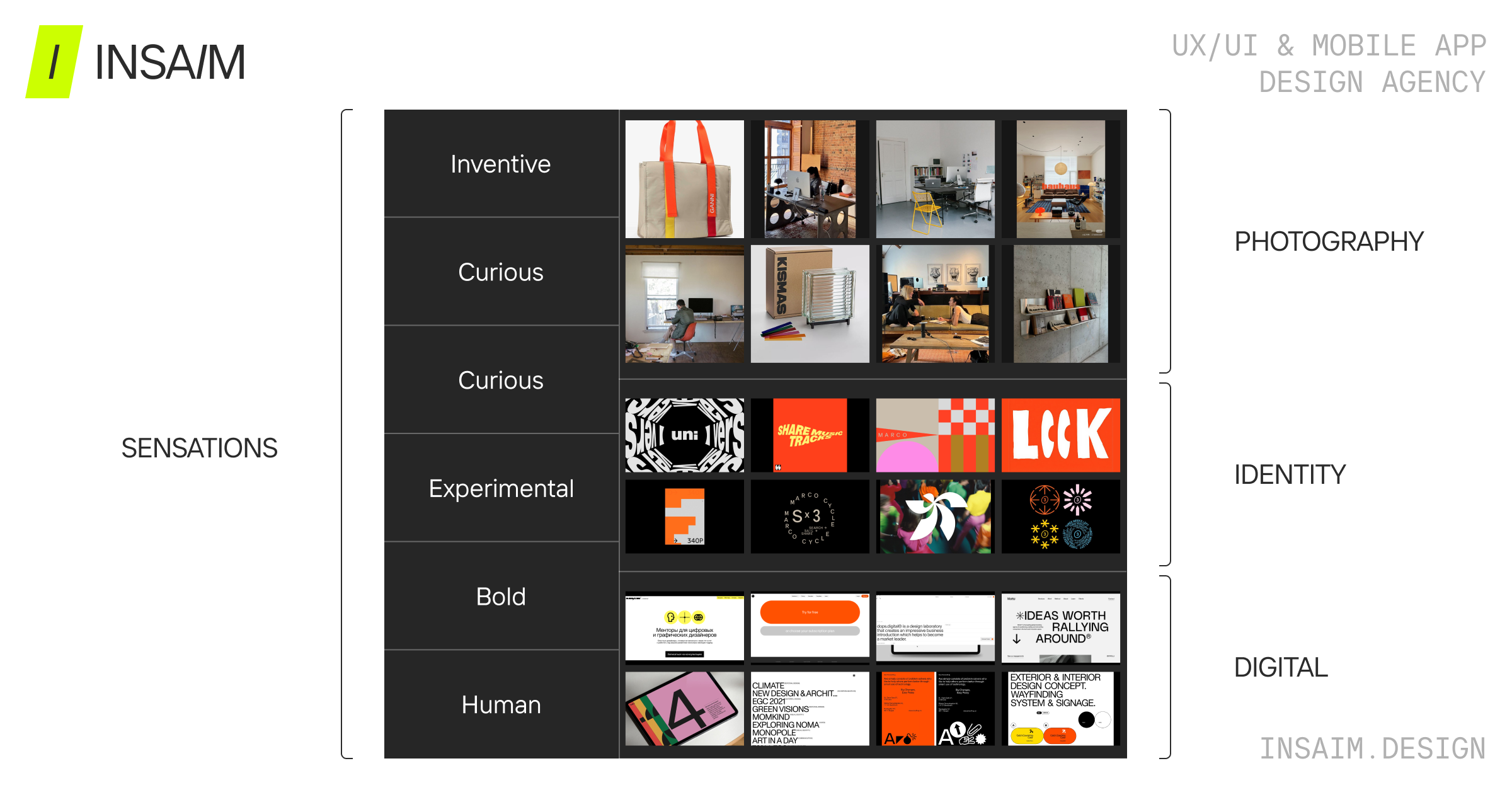
Photography
This section sets the direction for visual storytelling. It defines lighting style, composition, subject focus, color tone, and overall mood of imagery. The goal is to establish a consistent photographic language that supports marketing, web design, and product communication.
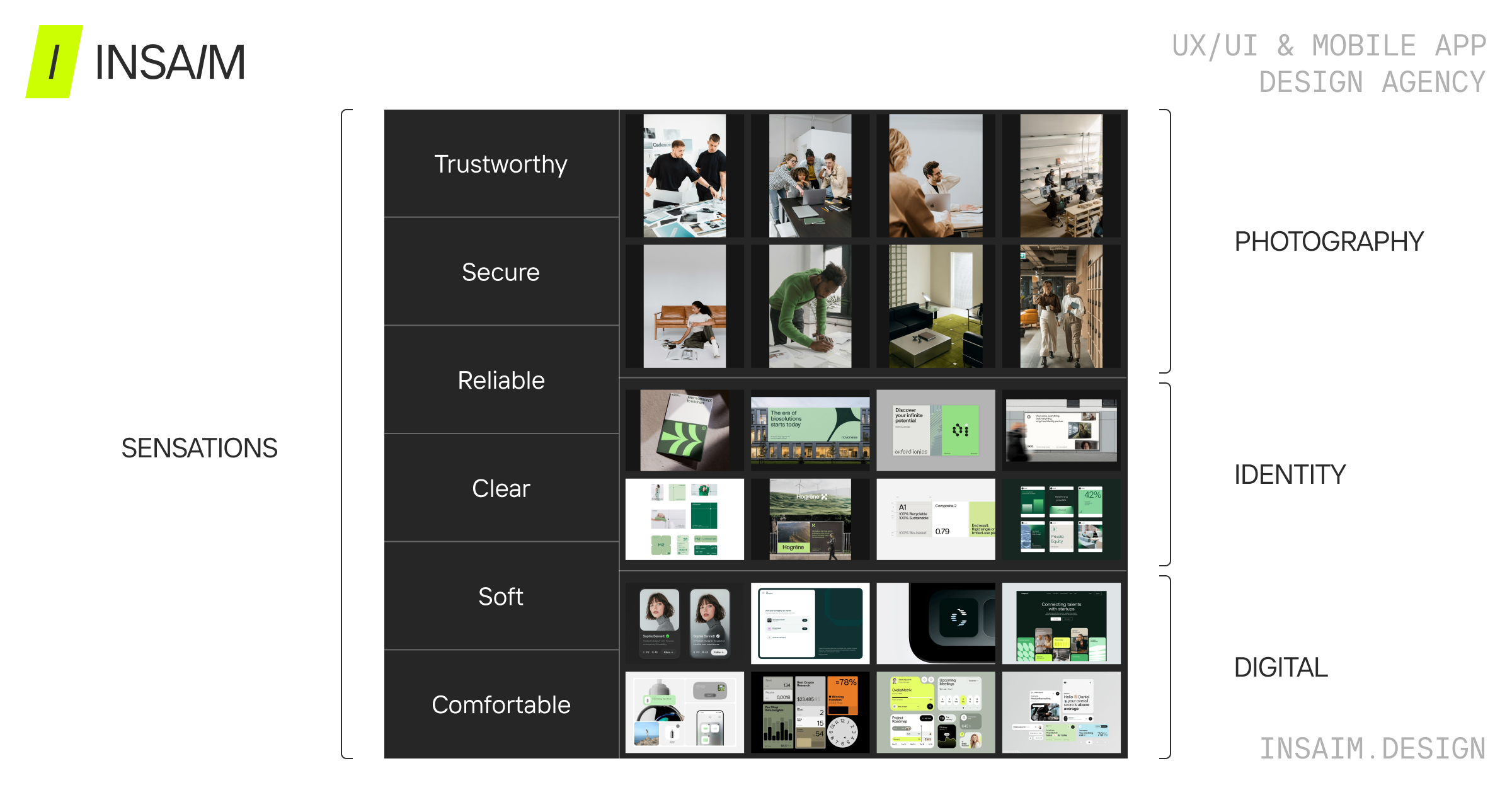
Identity
Here, mood translates into brand system elements — typography direction, logo behavior, graphic motifs, layout rhythm, and color logic. We present stylistic territory and principles rather than final designs.
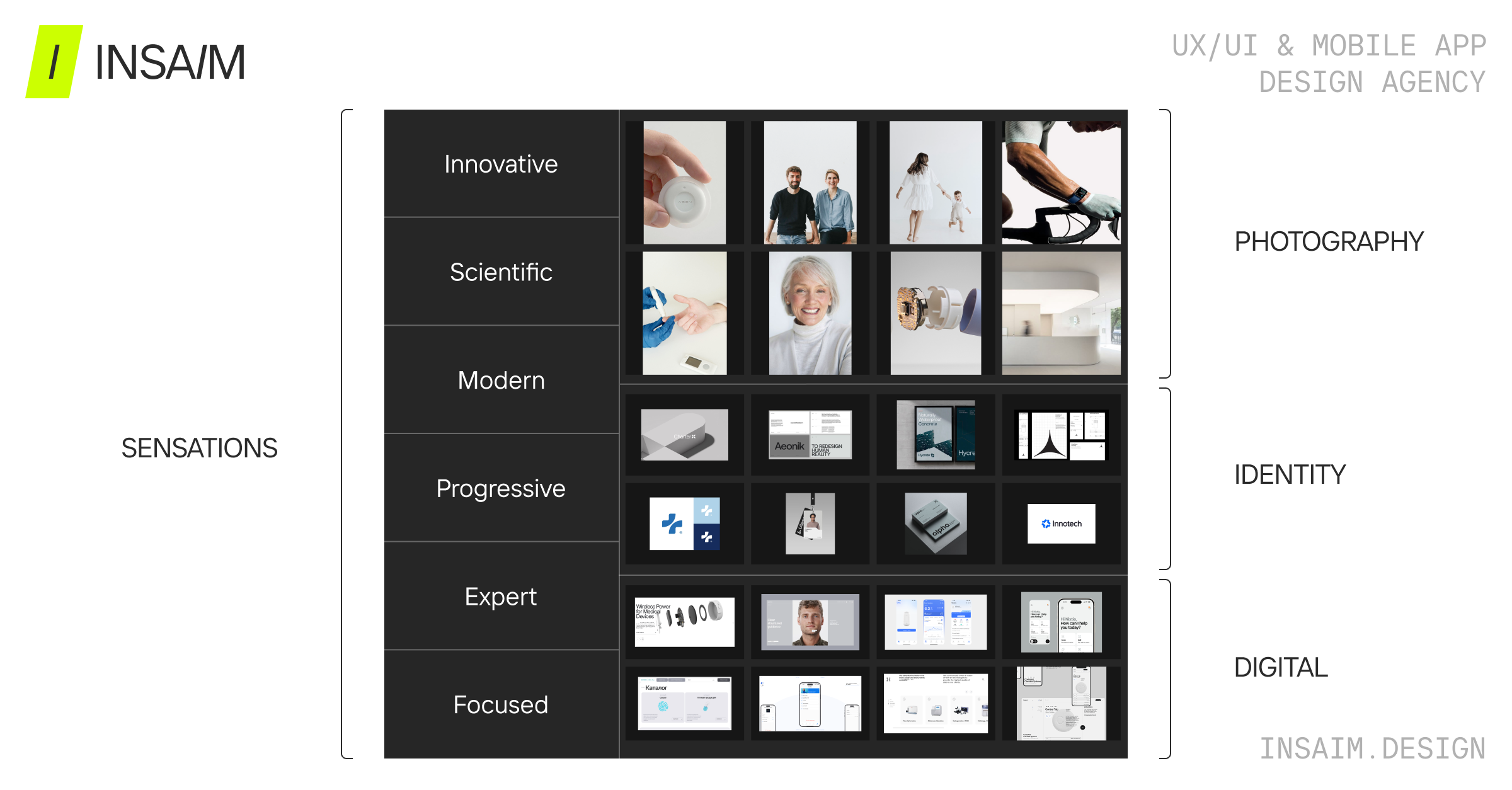
Digital Material
This includes references for UI patterns, layout density, spacing systems, and interaction tone. It connects abstract brand mood with practical digital execution, especially for SaaS and product-driven brands.
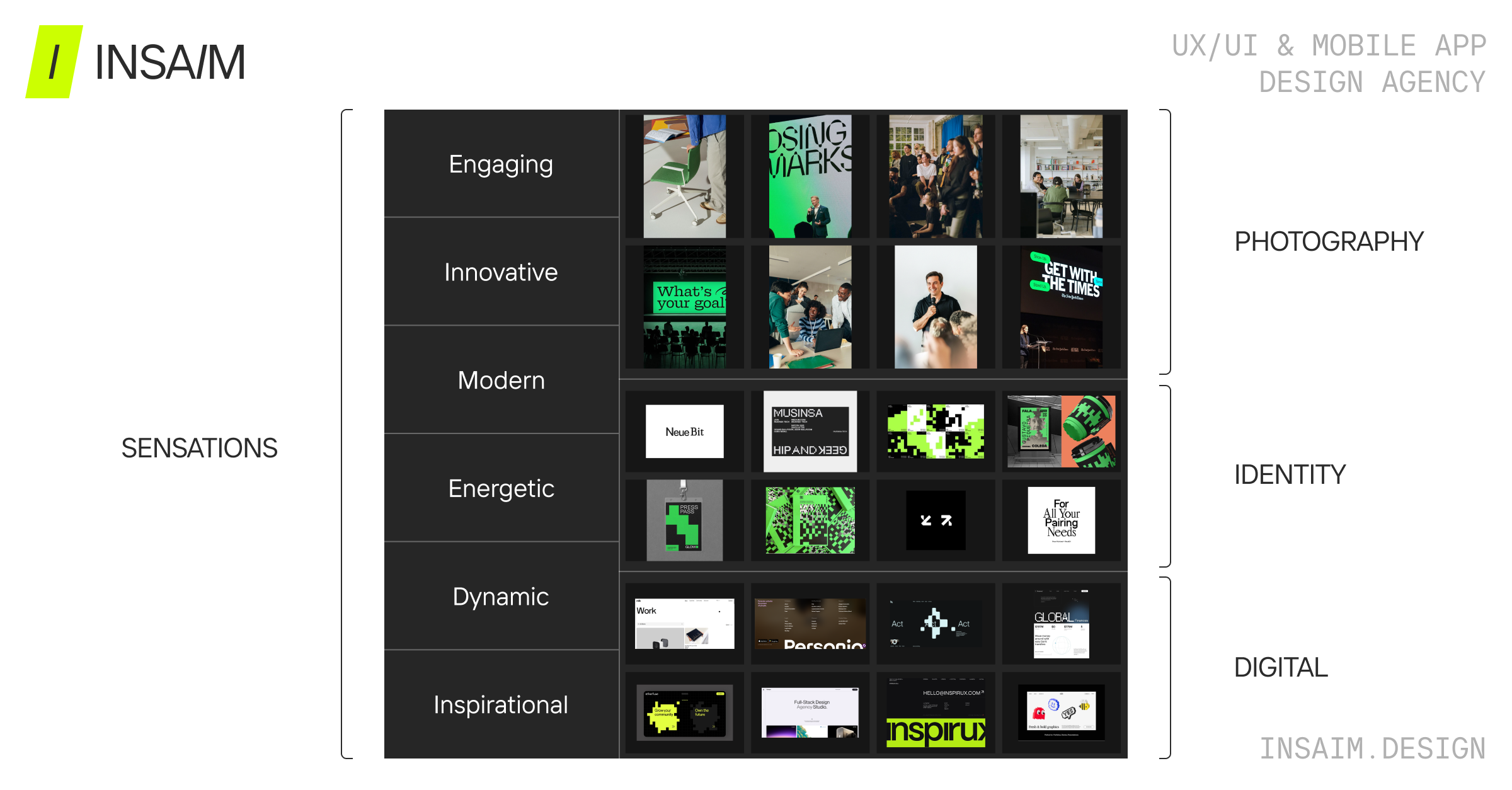
Links That Reference Real Product Examples
In full client presentations, we also include curated links to real product websites, or digital experiences that demonstrate the intended direction in action.
Image & Attribution Notice
The moodboards in this article were created by our team and include images sourced from publicly available materials. We do not claim ownership of third-party content; all rights remain with their respective creators. If you are a rights holder, please contact us. We are happy to credit your work appropriately or remove your image if needed.
How to Create a Moodboard for a Brand (Step-by-Step)
If you’re wondering how to create a moodboard for a brand, the process begins with clarity and strategy.
Step 1: Define Brand Positioning and Strategy
Before any visuals are collected, it’s essential to understand the core of the brand. A moodboard is not just about making something look good, it’s about translating the brand’s strategy into a visual language.
- Target audience: Who is the brand speaking to? Understanding their preferences, lifestyle, and expectations guides the mood, imagery, and color choices.
- Brand values: What principles and beliefs define the brand? These inform the emotional tone and the personality the visuals should communicate.
- Brand purpose: Why does the brand exist? This ensures the visuals reflect a deeper mission rather than being purely aesthetic.
- Brand differentiators: What makes this brand stand out from competitors? Identifying unique traits ensures the moodboard reflects a distinctive identity.
Step 2: Collect Visual Inspiration
At this stage, quantity is encouraged, as the goal is to explore possibilities and capture inspiration from multiple sources. Once the brand’s foundation is clear, the next step is to gather a broad range of visual references that reflect the desired direction. This stage is about exploration and discovery:
- Images: Look for photography, illustrations, and lifestyle shots that capture the brand’s tone, emotion, and context.
- Textures & Materials: Consider how surfaces, fabrics, or textures could translate into tactile or visual elements for packaging, collateral, or digital assets.
- Color References: Collect swatches that feel aligned with the brand personality, mood, and industry.
- Typography: Gather examples of typefaces that could reflect the brand’s voice—modern, classic, playful, or elegant.
- Patterns & Graphic Elements: Include motifs, shapes, and compositions that resonate with the brand’s character.
Step 3: Curate and Arrange Visuals
At this stage, the goal is to highlight the visuals that best define the brand’s mood. Keep only the elements that are most characteristic, so the overall tone can be easily grasped at a glance.
- Be selective: Remove any visuals that are unclear, conflicting, or don’t align with the brand’s positioning.
- Ensure consistency: All elements (images, colors, patterns, and forms) should feel cohesive and reinforce the same mood.
- Match colors and patterns: Make sure color palettes, textures, and patterns harmonize, supporting single visual language.
Step 4: Test, Refine, and Validate
After arranging the visuals, step back and evaluate:
- Does the moodboard communicate the brand’s values and character?
- Are the visuals cohesive and consistent?
- Does it guide design decisions clearly?
Final Thoughts
A brand moodboard is the first step in building a strong visual identity. It translates brand positioning and strategy into a visual system that can guide the entire design process.
If you want a brand that feels intentional, consistent, and emotionally resonant, start with a branding moodboard and let it guide every design decision moving forward.
FAQ
- What is a brand moodboard?
A brand moodboard is a visual tool that translates brand strategy into a clear visual direction. It combines color, typography, photography, textures, and graphic elements to define how a brand should look and feel before final design begins.
- Why is a branding moodboard important?
A branding moodboard ensures visual consistency and alignment before creating logos, websites, or marketing materials. It reduces subjective feedback, aligns stakeholders, and provides a foundation for a cohesive brand identity.
- What should a brand moodboard include?
A strong brand moodboard typically includes: 1. Emotional keywords or brand sensations 2. Photography direction 3. Color palette references 3. Typography inspiration 4. Graphic elements and layout style 5. Digital UI references (for SaaS or product brands)
- What is the difference between a moodboard and a style guide?
A moodboard defines the visual direction and feeling of a brand. A style guide documents finalized brand rules, such as logo usage, typography hierarchy, and color codes. The moodboard comes first — it informs the style guide.
- How do you create a moodboard for a brand?
To create a moodboard for a brand: 1. Define brand positioning and strategy 2. Collect visual inspiration 3. Curate and refine visuals 4. Validate alignment with brand values.