.svg)
.png)
.svg)
.svg)
.svg)


Digital products rarely fail because teams lack technology or ideas. More often, they struggle because decision-making lacks structure — research insights remain disconnected from design, feature roadmaps expand without validation, and development begins without a shared understanding of user needs. This is where UX design frameworks and user experience frameworks play a critical role.
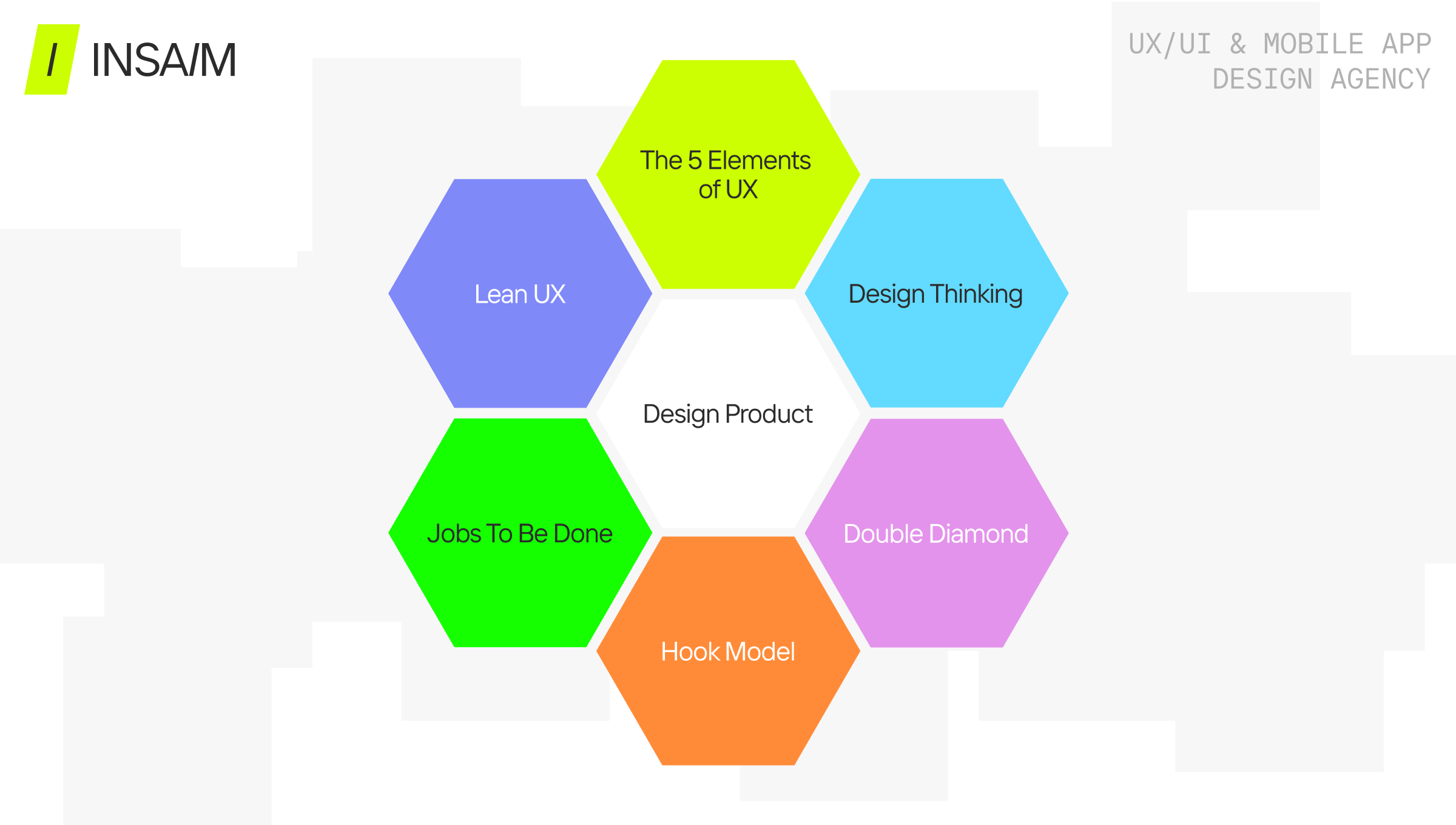
Frameworks are structured systems that help teams transform research into strategy, guide collaboration, and deliver consistent, user-centered experiences. They provide a repeatable process for navigating complex product challenges, from understanding user needs to designing, testing, and measuring outcomes.
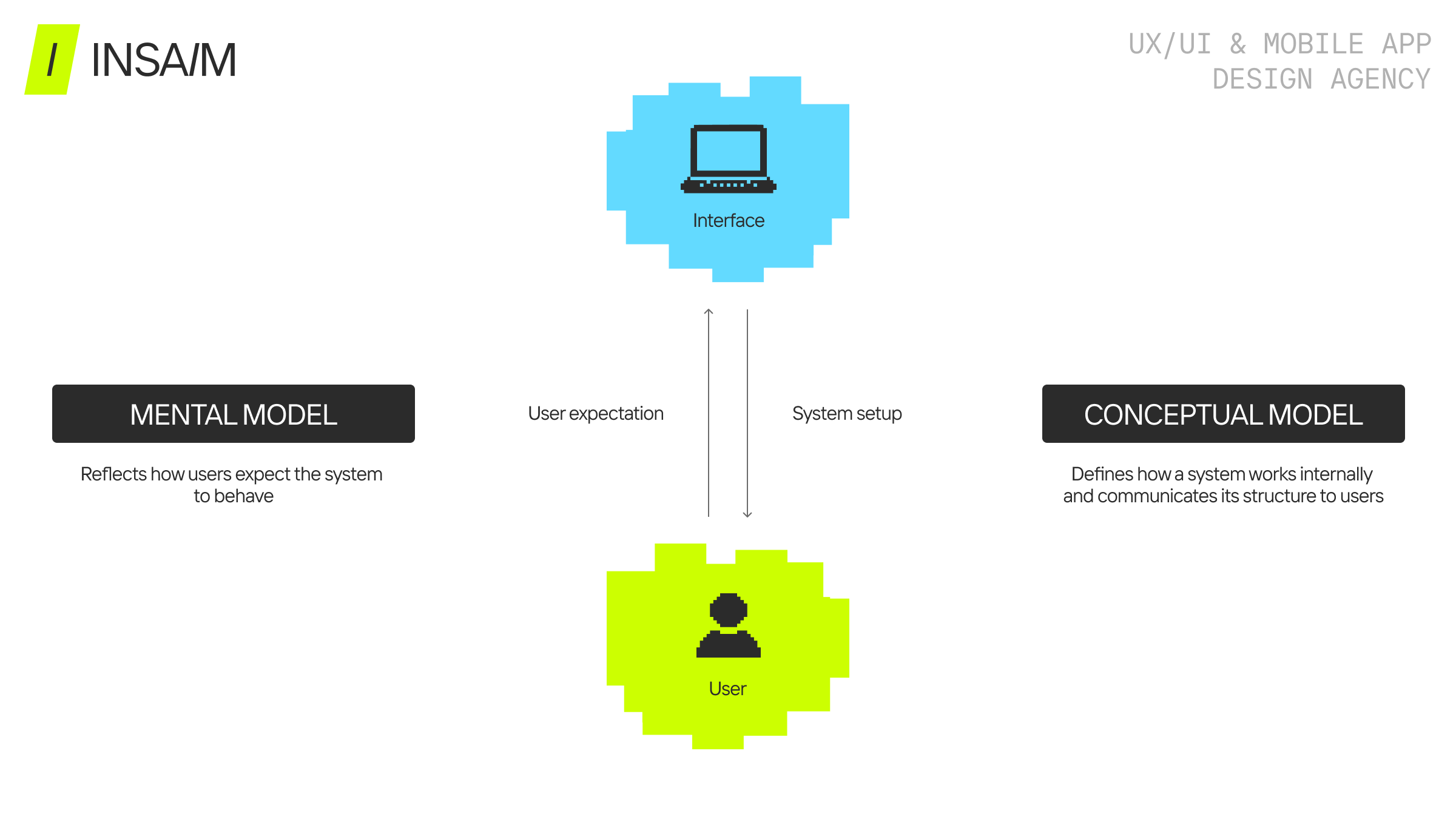
Two foundational concepts underpin nearly every framework: conceptual model UX design and mental model UX design. A conceptual model defines how a system works internally and communicates its structure to users, helping them form accurate expectations. A mental model reflects how users expect the system to behave based on their prior experiences and assumptions (Nielsen Norman Group). By aligning the system’s conceptual model with users’ mental models, frameworks like Design Thinking, Lean UX, and the Double Diamond UX design process ensure that design decisions not only solve problems but also feel intuitive and predictable.
Whether building SaaS platforms, enterprise dashboards, or mobile ecosystems, structured UX frameworks for improving user engagement reduce risk, streamline collaboration, and create digital products that are functional, intuitive, and genuinely valuable in daily use.
Why UX Frameworks Are Critical for Product Success
Without a structured product design framework, even technically strong products can fail to meet user needs. Implementing the right UX frameworks for improving user engagement offers clear benefits:
- Consistency: Approaches like Atomic System Design ensure scalable, reusable components.
- Efficiency: Lean UX frameworks enable rapid testing and iteration.
- Data-Driven Decisions: HEART Framework UX and Jobs to Be Done Framework UX allow measurement of engagement, retention, and task success.
UX Framework Categories: A Logical UX Process
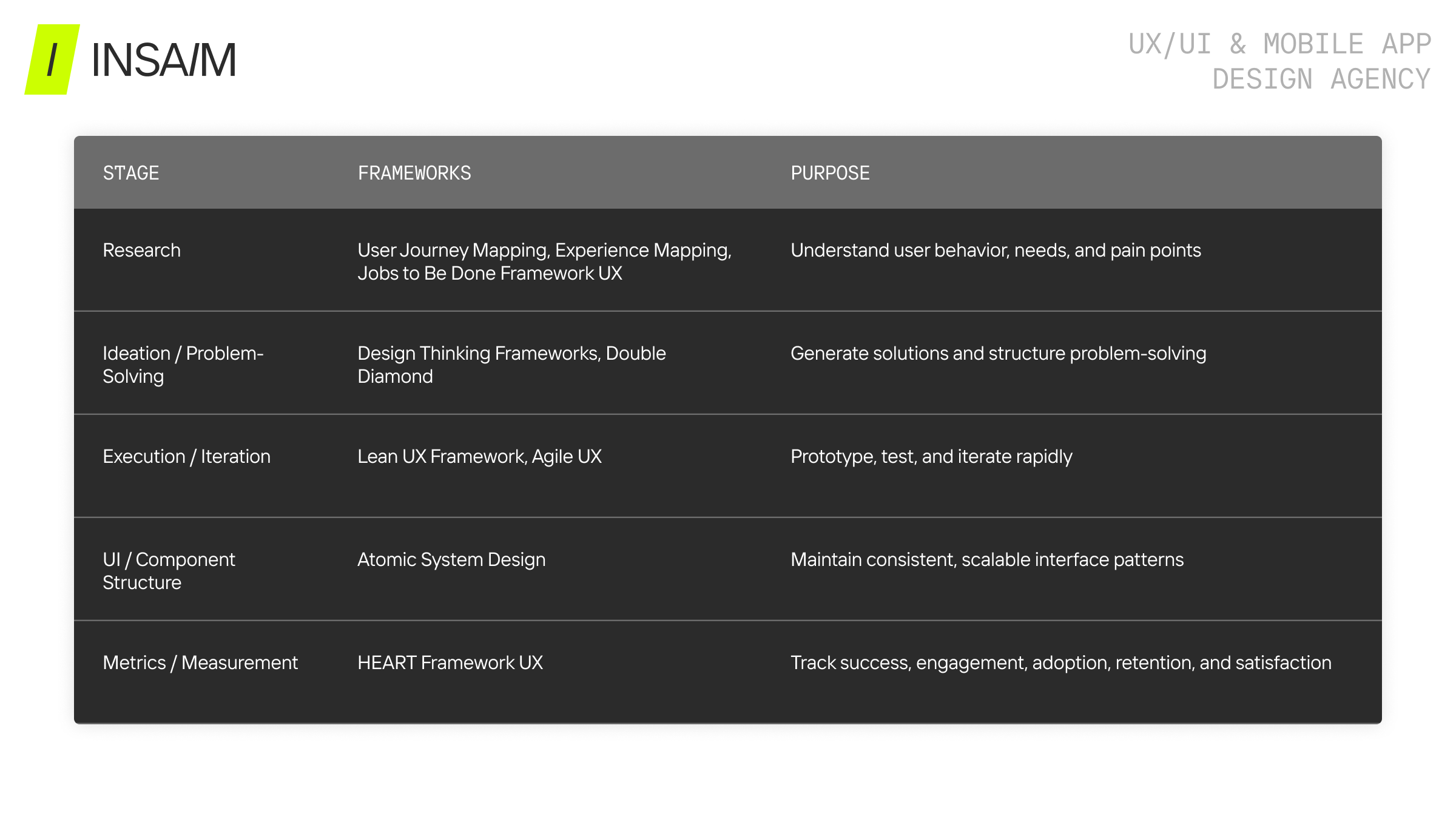
A practical UX process follows a logical flow from research to measurement, with different frameworks suited to each stage. Early on, research frameworks help you understand user behavior, needs, and pain points. Ideation frameworks then structure problem-solving and generate solutions, while execution frameworks support rapid prototyping, testing, and iteration. Once an interface takes shape, component-structure frameworks keep the UI consistent and scalable, and measurement frameworks track whether the design actually improves engagement, adoption, and retention. The table below maps each stage to the frameworks that serve it best:
1. User Journey Mapping & Experience Mapping
User journey mapping visualizes the actions, emotions, and interactions a person moves through over time, making it possible to see exactly where an experience breaks down. The practice begins by identifying the key user segments and the scenarios that matter most to them, then charting each step a user takes alongside the emotions and touchpoints attached to it. As the map fills in, friction points and missed opportunities that were invisible at the feature level start to stand out.
Consider a food delivery app that maps the path from app launch to completed order. Plotting the full sequence surfaces a checkout step where users consistently hesitate; redesigning that single moment of friction measurably improves retention. The strength of journey mapping is that it reveals these pain points in context and gives stakeholders a shared picture to align around. The trade-off is that it's time-intensive, and a static map can miss the more dynamic, nonlinear ways people actually behave.
2. Jobs to Be Done (JTBD) Framework UX
The Jobs to Be Done framework reframes design around the outcomes users are trying to achieve rather than the features they happen to use. Instead of asking what people want a product to do, it asks what "job" they are hiring the product for. Teams uncover these jobs through interviews, define the desired outcome for each one, and then prioritize the features that address the most critical jobs first (Interaction Design Foundation).
A project management tool, for example, might discover through this lens that users primarily want quick task summaries rather than another reporting dashboard. Designing a concise summary panel against that job lifts engagement because it serves a real outcome instead of an assumed one. JTBD's advantage is that it anchors design in genuine user goals; its cost is that it demands thorough research to surface the true jobs, which are often different from what users first say.
3. Design Thinking Frameworks
Design Thinking frameworks offer a human-centered, iterative path that moves through five modes — empathize, define, ideate, prototype, and test — to keep solutions aligned with users' mental models. The process opens with user research to understand needs, narrows to a clear articulation of the core problem, then widens again to brainstorm solutions before building low-fidelity prototypes and testing them. Each loop feeds the next, so the design sharpens with every iteration.
A task management app applying this approach might prototype a visual task board, put it in front of users, and refine it repeatedly until the workflow feels intuitive. Design Thinking's value lies in how it encourages creativity while keeping the result tethered to how people actually think. The trade-off is that doing it properly is resource- and time-intensive, which can be hard to justify under tight deadlines.
4. Double Diamond UX Design Process
The Double Diamond UX design process gives teams a clear four-stage structure — Discover, Define, Develop, Deliver — that alternates between expansive and focused thinking. The first diamond researches user needs and context, then converges on a precise problem statement. The second diamond opens back up to prototype a range of solutions before converging again to test and launch a refined result.
An e-learning platform might use this model to research the challenges learners face, define the specific needs worth solving, prototype several course layouts, and test the interface until it becomes intuitive. The framework's strength is the clarity and team alignment it creates by making the current stage explicit. Its limitation is rigidity: the linear progression can feel constraining for fast-moving or highly experimental projects that need to skip ahead or loop back unpredictably.
5. Lean UX Framework
The Lean UX framework prioritizes rapid experimentation and validated learning over heavy documentation. Rather than specifying a feature in full before building it, teams construct minimum viable experiences, test them quickly with real users, iterate on what the feedback reveals, and only scale a feature once it has proven its value. The emphasis throughout is on learning fast and committing late.
A fitness app might release a "weekly goal" feature to a small test group, watch how people respond, refine it based on that signal, and roll it out broadly only after validation. Lean UX rewards teams with fast idea validation and strong cross-functional collaboration. The catch is that it depends on tight alignment across those functions, and when rushed it risks shallow exploration — shipping something validated as usable but never examined deeply enough to be genuinely good.
6. Agile UX
Agile UX integrates design directly into Agile development cycles so that research, prototyping, and testing happen continuously alongside engineering rather than in a separate phase before it. In practice, this means embedding UX designers within sprints, running rapid prototyping and testing inside each one, iterating continuously on feedback, and aligning every UX update with the corresponding development increment.
A note-taking app might prototype a tagging feature, test it within a single sprint, and refine it before the full release ever ships. The benefit is continuous improvement and a design practice that never drifts out of sync with development. The risk is the mirror image of that speed: when velocity becomes the priority, design depth can quietly get sacrificed to keep pace with the sprint cadence.
7. Atomic System Design
Atomic System Design organizes an interface into modular, reusable components arranged in a clear hierarchy — atoms, molecules, and organisms — to keep the UI consistent and scalable as a product grows. The smallest pieces, atoms, are elements like buttons and input fields. Those combine into molecules such as cards and forms, which in turn assemble into organisms like dashboards and menus. Built this way, the system enforces consistency and reuse across the entire product. (For a deeper look at building these systems, see our guide to the best UI kits and design systems.)
A banking app might define a set of reusable buttons, cards, and input fields, then compose dashboards from them that share consistent patterns throughout. The payoff is a scalable, consistent UI that makes future updates dramatically simpler, since a change to one component propagates everywhere it's used. The cost is front-loaded: the initial setup is resource-intensive before the efficiency gains begin to compound.
8. HEART Framework UX
The HEART Framework UX exists to quantify experience quality across five dimensions — Happiness, Engagement, Adoption, Retention, and Task Success — so that design decisions can be guided by data rather than intuition alone. Teams select the categories most relevant to their product, define concrete metrics for each (satisfaction ratings, feature usage, retention rates, task completion), collect and analyze that data on an ongoing basis, and adjust design decisions as the insights accumulate.
A subscription learning platform might track lesson completion as a measure of Engagement, satisfaction surveys for Happiness, new course starts for Adoption, alongside retention and task efficiency. HEART's strength is the measurable, prioritizable insight it produces about what's actually working. Its limitation is the commitment required: it depends on continuous data collection, and the numbers alone can miss the qualitative nuance behind why users feel the way they do.
Conclusion
UX frameworks are part of a cohesive, process-oriented design ecosystem. Understanding UX frameworks, models, and processes is essential to building products that succeed, delight users, and provide lasting value.
- Make informed, user-centered decisions
- Deliver consistent and intuitive experiences
- Measure outcomes to improve engagement
- Align research, design, and development
FAQ
- What is a UX design framework?
A UX design framework is a structured approach that guides teams through designing, building, and measuring digital experiences. It provides a repeatable system for organizing research, ideation, prototyping, testing, and iteration, ensuring products are user-centered and consistent. Frameworks help transform insights into actionable design decisions, reduce risk, and align cross-functional teams. Examples include Design Thinking frameworks, Lean UX framework, and the Double Diamond UX design process. - How do UX design frameworks vs design systems differ?
While both support user experience, UX design frameworks and design systems serve distinct purposes. UX frameworks focus on the process of creating experiences, including research, ideation, iteration, and measurement, guiding teams on how to design. Design systems focus on the visual and functional components of the interface, including typography, colors, layouts, and reusable UI patterns, guiding teams on what the design looks and behaves like. In short, frameworks structure the workflow, while design systems structure the product interface. - What is conceptual model UX design?
A conceptual model is a simplified representation of how a system works internally and communicates that structure to users. It helps users understand system behavior and anticipate outcomes, reducing confusion and errors. For example, a calendar app’s conceptual model might define that events are organized by day and time, and users can drag events to reschedule. Conceptual models inform design decisions and ensure consistency between system logic and user interactions. - What is mental model UX design?
A mental model represents how users expect a system to behave based on prior experience, knowledge, and assumptions. Designing interfaces according to user mental models ensures that interactions feel intuitive and predictable. For instance, users expect that clicking on an email opens it, swiping left deletes it, or pressing “Compose” starts a new message. Aligning with mental models improves usability, adoption, and user satisfaction by reducing learning curves and friction. - How do UX frameworks improve user engagement?
UX frameworks improve user engagement by structuring design decisions around validated user needs and measurable outcomes. They help teams understand what users want, align features with user goals, and create intuitive, predictable interactions. Frameworks like Jobs To Be Done (JTBD) and Design Thinking ensure that every feature solves a real problem, while measurement frameworks like HEART track adoption, retention, and satisfaction. By reducing cognitive friction, guiding workflows, and continuously iterating based on data, UX frameworks ensure users have meaningful, efficient, and satisfying experiences — which directly drives engagement and long-term retention.