.svg)
.png)
.svg)
.svg)
.svg)


Choosing between a web app vs mobile app is one of the most critical strategic decisions for any digital product. Both can deliver exceptional user experiences, but each comes with unique strengths, costs, and long-term implications for your business.
Before diving deeper, let’s address the question what is a mobile web app vs native app and clarify how they differ.
- A mobile web app (or web app, or mobile web application) is accessed through a browser and doesn’t require installation — users simply visit a URL, much like a website, but interact with dynamic, app-like functionality.
- A mobile app (or native app), on the other hand, is a native application built specifically for iOS or Android devices and installed directly from an app store, giving deeper access to device features and offline capabilities.
Understanding these definitions is key — because the choice between a web app vs mobile app affects user experience, development strategy, costs, and long-term engagement. Many businesses also explore a web and mobile app strategy to reach a wider audience while maintaining consistent functionality across platforms.
Key Differences: Mobile App vs Mobile Web
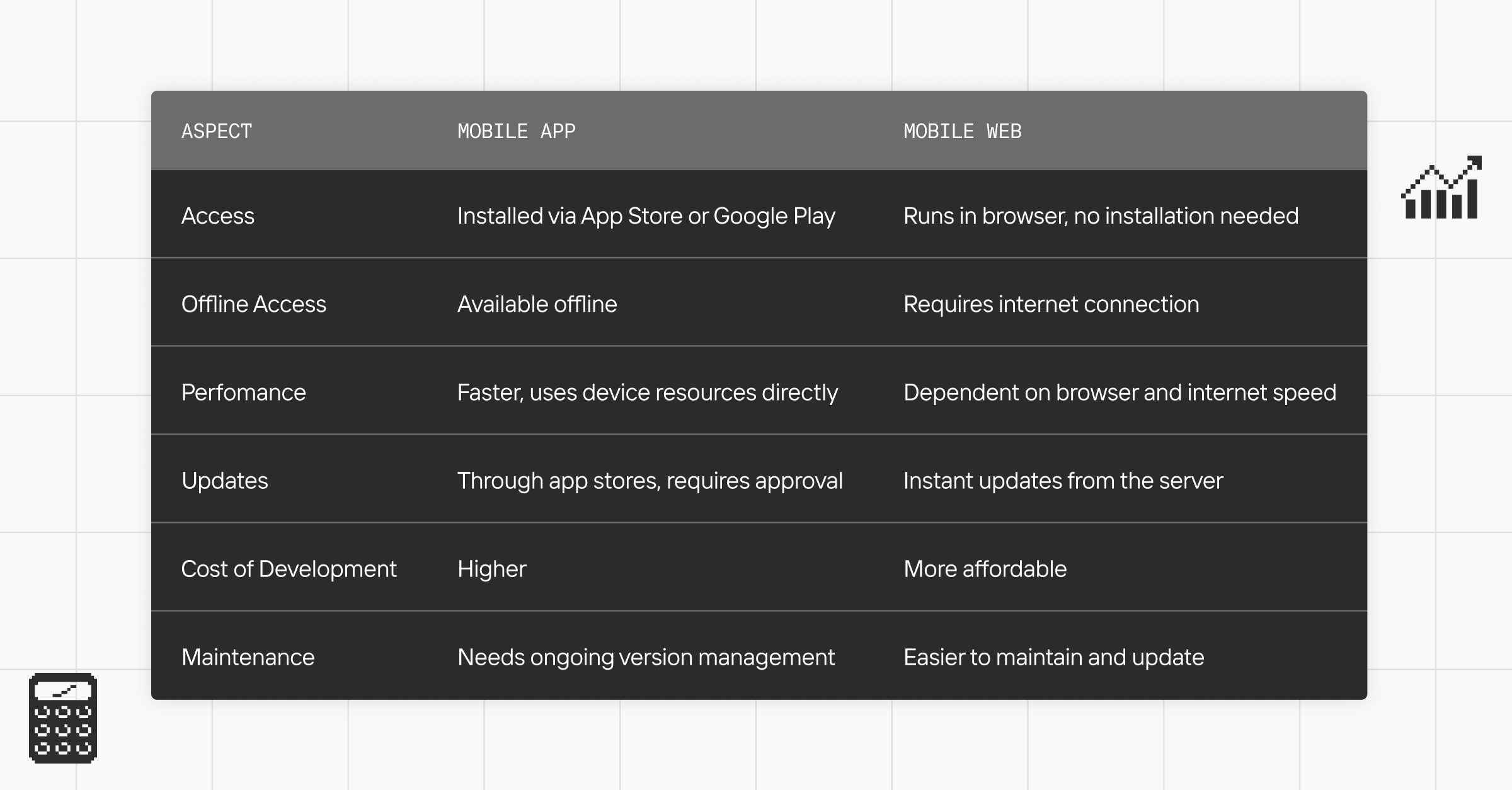
A native mobile app provides full control over device features (camera, GPS, notifications) and can deliver smoother UX. Meanwhile, a progressive web app (PWA) or responsive mobile website offers universal accessibility — ideal for reaching a wider audience with less friction.
Business Goals and User Scenarios
The right choice depends on your business model, target audience, and engagement goals.
When a Mobile App Makes Sense
- You want to build deep, repeated engagement (e.g., fitness, fintech, education).
- Offline access or push notifications are essential.
- Personalization and data-driven recommendations play a key role.
- You have the budget for long-term maintenance and updates.
Example: A learning platform offering interactive lessons and progress tracking benefits from a native mobile app to improve user retention.
When a Mobile Website or Web App is Enough
- You need broad reach and discoverability through search engines.
- Your service doesn’t rely on device-specific features.
- Speed and flexibility are more important than native UX.
- You plan to iterate and test features rapidly.
Example: A service marketplace or SaaS product often thrives as a web app, where updates are instant and accessible from any device.
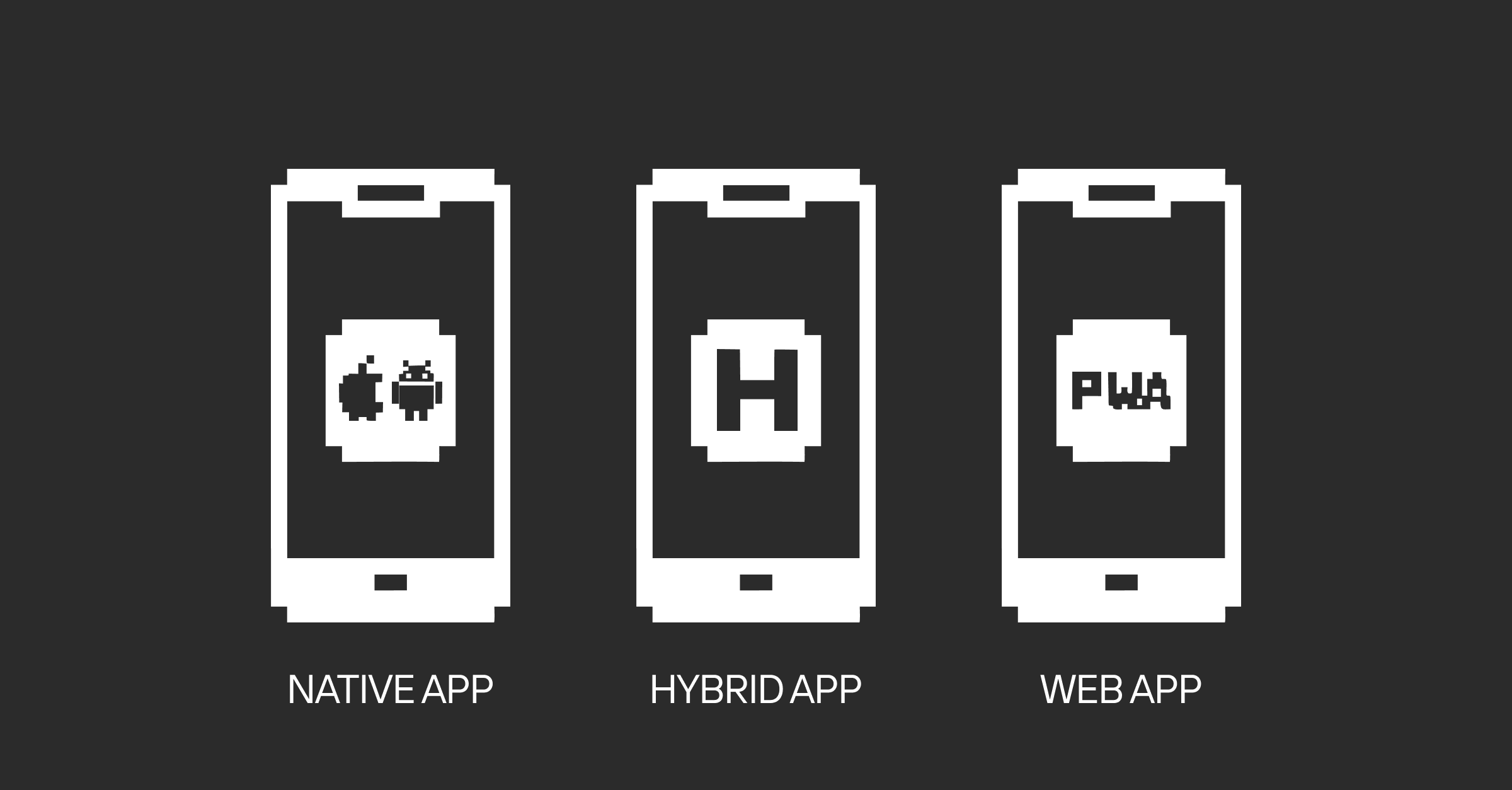
For some products, combining a web and mobile app approach — also known as a hybrid app — allows teams to balance accessibility, user engagement, and cost-efficiency across multiple platforms.
When deciding between a web app vs mobile app, it’s not just about functionality — user experience and interface design play a crucial role in engagement. For inspiration on intuitive and visually engaging interfaces, see 10 Best App UI/UX Designs.

Cost, Maintenance, and Speed
Cost is one of the most decisive factors.
A native mobile app development (for iOS and Android) can cost up to 3–5x more than a responsive web app.
- Web apps: Faster to develop, update, and scale.
- Mobile apps: Higher upfront investment but stronger retention for loyal users.
Maintenance differs: every app update must pass store reviews and be downloaded by users, while web apps update instantly in the browser.
SEO, Performance, and Analytics
From a visibility standpoint, the mobile web is far superior.
- Web apps and responsive websites can be indexed by Google, integrated with mobile web analytics, and optimized for SEO — driving consistent organic traffic.
- Mobile apps, in contrast, exist within closed ecosystems.
Industry Examples
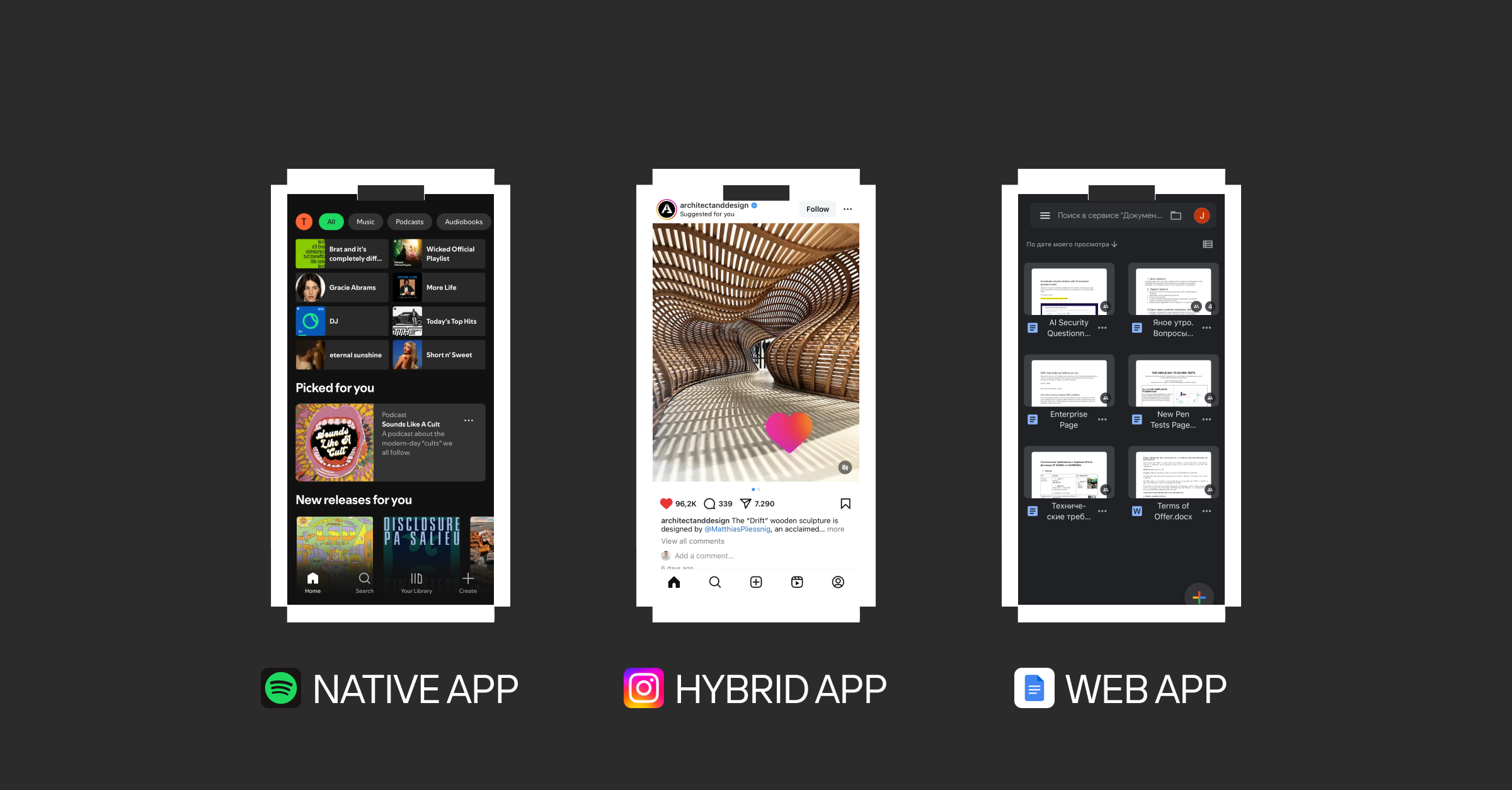
- Spotify is a native mobile app for iOS and Android, providing optimized performance, offline playback, and push notifications. Native development ensures smooth UX and full access to device features.
- Google Docs is a widely used web application, accessible through browsers without installation. It allows real-time collaboration, document editing, and cloud storage on any device, demonstrating the power of modern web apps
- Instagram uses a hybrid app approach with React Native, combining native performance and cross-platform efficiency. This allows a single codebase for iOS and Android while maintaining consistent UX
Conclusion
Both web app vs mobile app can effectively serve your business — the key is aligning the choice with your user needs, growth goals, and resource strategy.
- Choose a mobile app for engagement, personalization, and deep user interaction.
- Choose a web app for reach, flexibility, and fast iteration.
- Consider a hybrid app if you want a balance between reach, cost-efficiency, and native-like experience across multiple platforms.
FAQ
- What’s the main difference between a mobile app and a website?
A mobile app is downloaded and runs natively on a device, while a website (or web app) works in a browser and doesn’t require installation. - What is a hybrid app?
A hybrid app combines features of both native apps and web apps. It is installed on a device like a native app but built using web technologies, allowing it to run across multiple platforms while maintaining access to some device features. - Is it cheaper to build a mobile app or a web app?
A web app is generally cheaper and faster to develop. A mobile app usually demands more investment due to platform-specific development and maintenance. - Which is better for SEO — app or website?
Websites and PWAs are indexed by search engines, offering much stronger SEO potential than mobile apps. - What is the difference between a PWA and a native app?
A PWA is a web app that behaves like a native app, including offline support and push notifications, but it runs in a browser without requiring installation.