.svg)
.png)
.svg)
.svg)
.svg)


If you're building an app, SaaS platform, marketplace, or fintech product, you’ve likely heard the advice that “you need digital product design.” But what does this really mean, and why should it be a priority for your startup or product team? Far too often, founders equate design with simply making a product look attractive, but digital product design encompasses much more. It’s about crafting an experience that users understand, enjoy, and engage with, while simultaneously meeting your business goals and preparing your product for scale.
This guide provides a clear, jargon-free explanation of digital product design, including its meaning, process, and direct impact on growth, engagement, and revenue. It is specifically aimed at founders, product managers, startup teams, and product leaders who need to make informed decisions about design investment and execution.
What Is Digital Product Design? (Simple Definition)
At its core, digital product design is the structured process of planning, designing, and refining how a digital product works, feels, and looks so that it effectively solves user problems and drives measurable business outcomes. In other words, digital product design goes beyond aesthetics; it involves understanding your users, defining the right features and flows, creating intuitive and usable experiences, and ensuring that your product can scale without introducing complexity or inconsistencies.
Digital product design brings together three complementary disciplines:
- UX design, which ensures usability and effective problem-solving
- UI design, which focuses on visual appeal and clarity
- Product strategy, which aligns design decisions with business goals and key performance indicators
Products that benefit from thoughtful digital product design include:
- mobile applications
- SaaS platforms
- marketplaces
- fintech apps
- web portals that function like complex software products rather than simple websites
Ultimately, digital product design ensures that your product is not only usable and beautiful but also strategically aligned with your business objectives, giving your users an experience that they understand, trust, and enjoy.
Why Digital Product Design Matters for Startup Growth
Investing in digital product design is one of the most impactful ways early-stage and scaling startups can drive growth. Startups often fail not because their technology doesn’t work, but because users struggle to understand the value of the product, encounter friction during onboarding, or become frustrated with confusing interfaces.
Without structured digital product design, common problems include users abandoning sign-up flows, poor activation rates, repeated development of the same screens due to unclear requirements, internal disagreements among stakeholders, and products that feel inconsistent or untrustworthy. On the other hand, a well-executed digital product design approach ensures that users understand your value proposition immediately, onboarding is smooth and predictable, conversion and retention improve, development teams move faster with fewer redesigns, and both investors and customers perceive credibility.
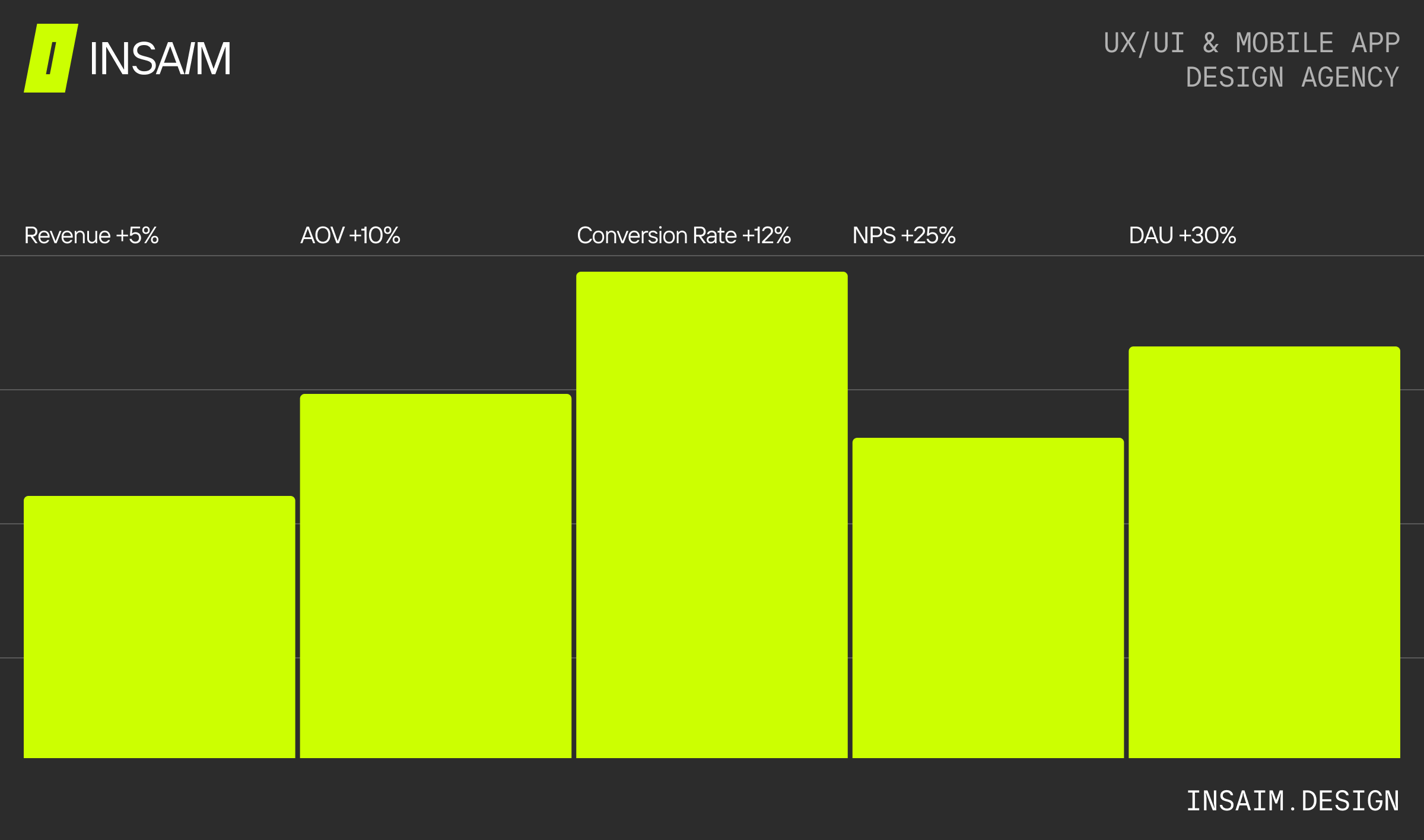
- Investing in digital product design is more than just aesthetics. According to McKinsey’s “The Business Value of Design”, companies in the top quartile of the Design Index achieved 32 percentage points higher revenue growth and 56 percentage points higher total returns than their industry peers over five years. This clearly demonstrates that design can directly drive measurable business outcomes.
- Similarly, research from the Harvard Business Review: “Design Can Drive Exceptional Returns for Shareholders” shows that design-driven companies outperformed the S&P 500 by more than 200% over a decade, underscoring the fact that design is a strategic investment that can deliver substantial returns for founders, leadership teams, and investors alike.
For startup teams, the takeaway is straightforward: digital product design translates your business model and strategy into a tangible, usable, and engaging experience that drives growth, customer satisfaction, and measurable ROI.
Digital Product Design vs UX, UI & Brand Design
The terminology around digital product design can be confusing, especially for early-stage founders. Understanding the distinction between UX, UI, and brand design is crucial for setting expectations and defining roles.
UX Design (User Experience)
UX design focuses on how a product works and how users interact with it. This includes mapping user journeys, defining information architecture, creating wireframes and prototypes, and solving usability problems.
Proper UX design principles ensure your product is intuitive and addresses core user needs effectively, reducing friction and improving engagement.
UI Design (User Interface)
UI design is about how a product looks and feels visually, covering aspects such as layouts, colors, typography, buttons, forms, and component design. UI design ensures clarity, consistency, and brand alignment across the product interface.
For more insight, check out why UX matters in 2025, which explains how visual design choices affect usability and user perception.
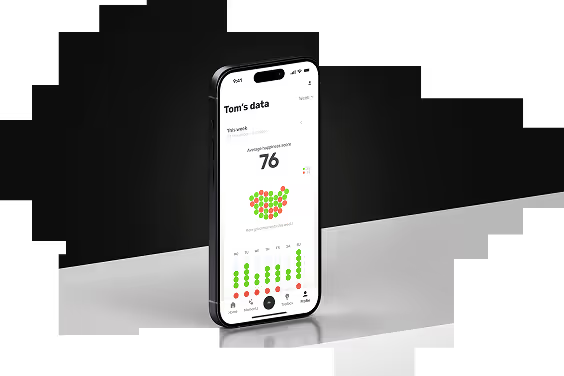
Digital Product Design
Digital product design combines all of these disciplines with strategic product thinking, ensuring the right features, flows, and interfaces are prioritized according to business goals and key metrics. A digital product designer serves as the bridge between user needs, business strategy, and technical feasibility.
The Digital Product Design Process: From Idea to Launch
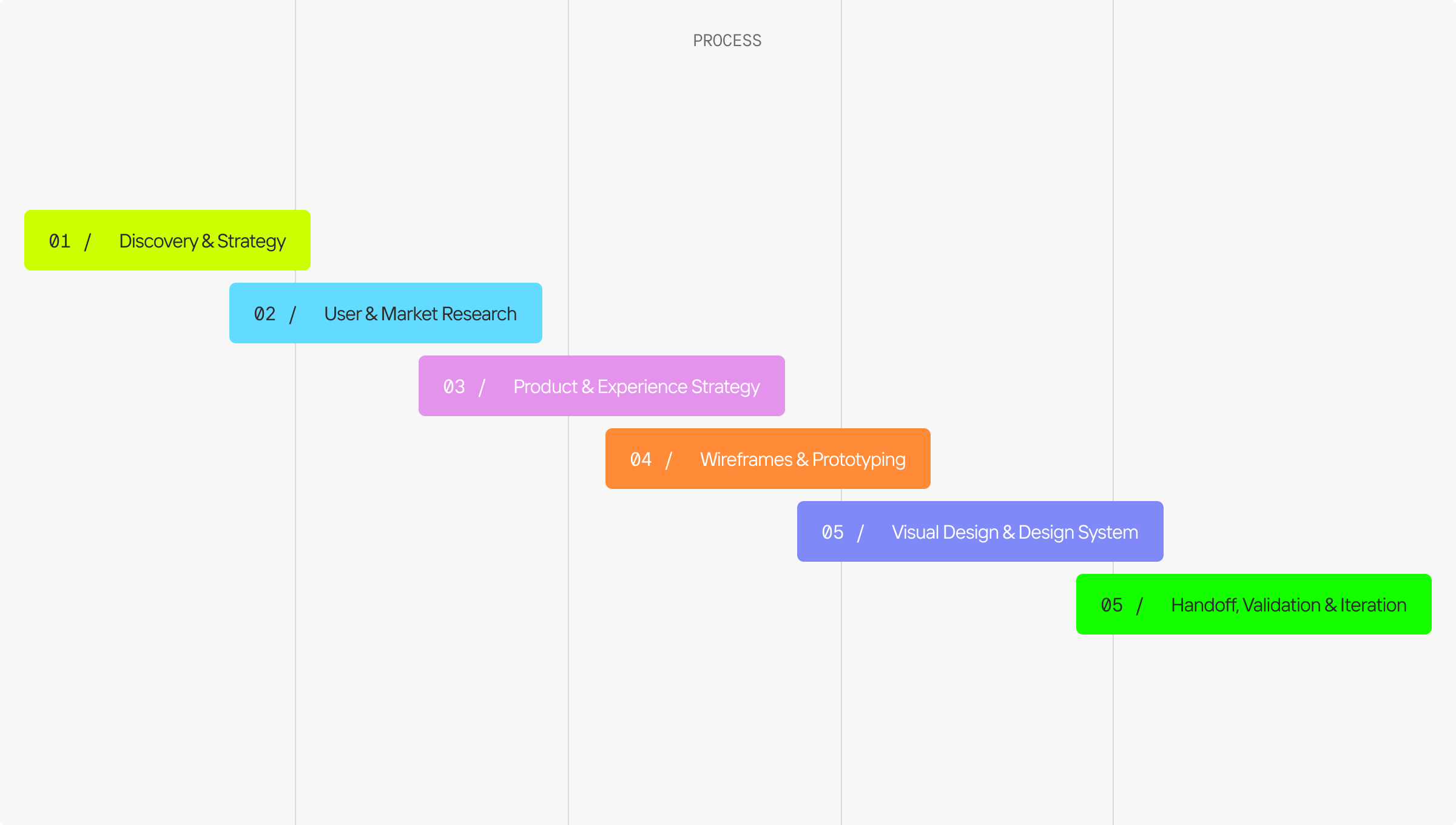
A structured digital product design process provides clarity, reduces costly redesigns, and ensures alignment across the team. While every team has its own approach, most processes follow similar stages.
- Discovery & Strategy
The first step is to align on business goals, user needs, and constraints. This involves stakeholder interviews, reviewing analytics and user feedback, and defining KPIs such as sign-ups, conversions, and retention. Typical outputs include a problem definition, clear objectives, and a prioritized scope. - User & Market Research
Understanding your users and market is critical. Activities include user interviews or surveys, competitor analysis, and reviewing support tickets or NPS comments. Outputs include lean personas, core user needs, and key use cases. You can validate findings using key UX metrics to measure for exceptional user experience. - Product & Experience Strategy
At this stage, teams map user journeys, design information architecture, and define features for MVP and future releases. Deliverables include a product map, user flows, and prioritized feature lists. - Wireframes & Prototyping
Wireframing and prototyping help explore solutions and test ideas before final visual design. Activities include low- and mid-fidelity wireframes, clickable prototypes, and iteration based on feedback. This stage produces wireframes, interactive prototypes, and early validation of flows. - Visual Design & Design System
Visual design brings the product to life. High-fidelity screens are created, brand guidelines applied, and a design system established for components like buttons, forms, and modals. A well-maintained design system ensures consistency and scalability as the product evolves. - Handoff, Validation & Iteration
The final stage involves preparing design specs, supporting implementation, and running usability tests. Iteration is continuous, informed by user feedback and analytics, ensuring the product remains effective and aligned with business goals.
What Does a Digital Product Designer Actually Do?
A digital product designer is responsible for translating business goals and user needs into tangible, effective interfaces and experiences. Core responsibilities include:
- designing flows
- wireframes
- collaborating with PMs and developers
- using research and testing data to inform improvements
Key skills include:
- UX design (user flows, research)
- UI design (layout, hierarchy, accessibility)
- Product thinking (metrics, trade-offs)
- Collaboration
For startups, a skilled digital product designer can be one of the most leveraged hires or partners, helping avoid costly missteps and ensuring the product resonates with users.
When Your Startup Should Invest in Digital Product Design
You don’t need a full design team from day one, but you should invest when:
- You have a prototype but unclear user flows
- Users drop off during sign-up or onboarding
- The product feels clunky or inconsistent
- Scaling introduces UI/UX debt
- You are preparing for fundraising
Even rough documentation of your product, users, KPIs, and constraints allows a design partner to focus and iterate efficiently.
Digital product design example
Great functionality alone isn’t enough if users struggle to navigate it. Tapobit’s all-in-one QR code platform connects offline and online experiences through smart, customizable QR codes, but designing such a feature-rich platform from scratch required careful attention to usability. The goal was to create a friendly, intuitive, and engaging interface.
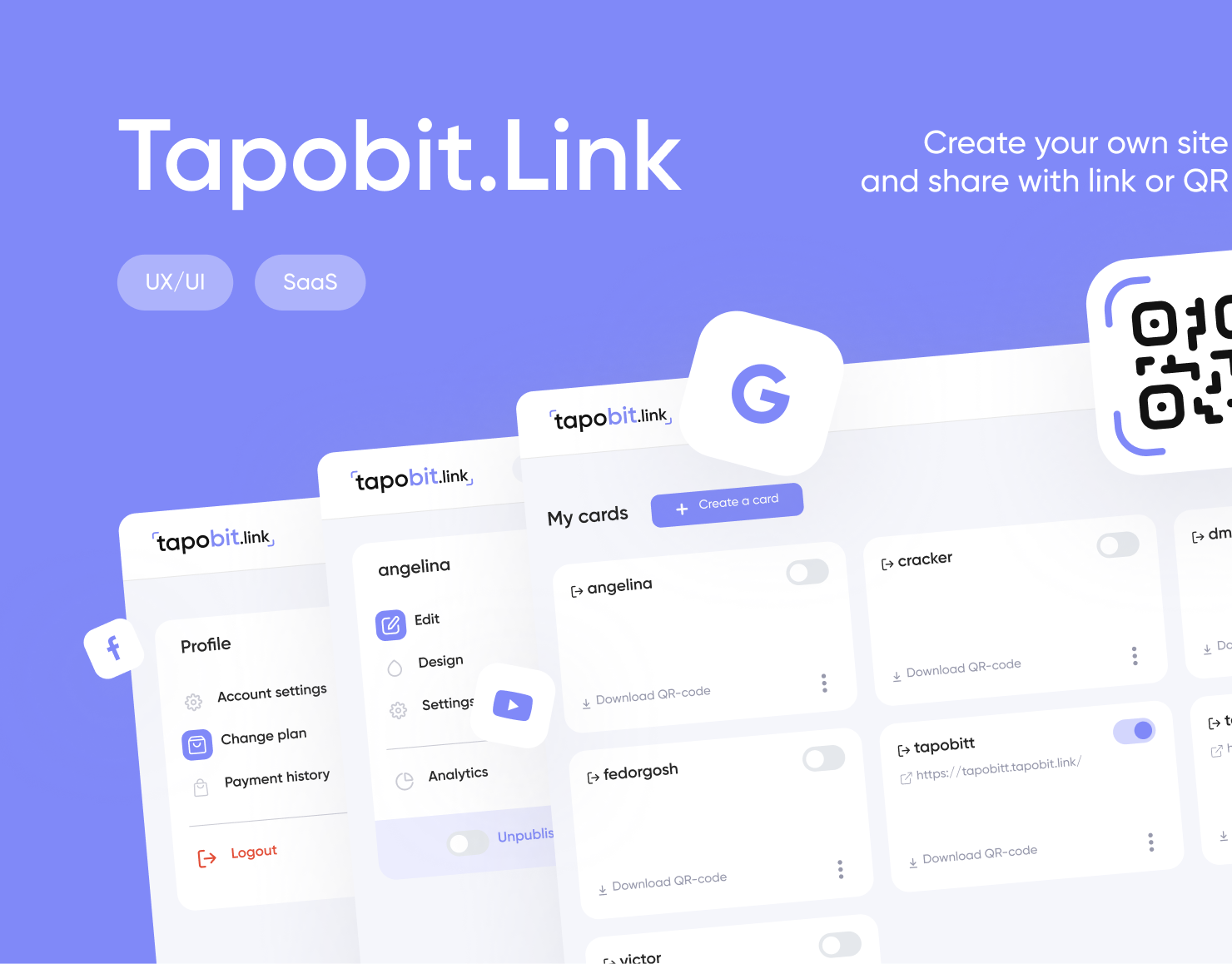
We applied digital product design principles to structure complex functionality, simplify navigation, and validate key flows through prototypes. Focusing on the Customer Experience Space, we crafted an environment where users, partners, and products could interact seamlessly. The result was a flexible, intuitive, and scalable platform that empowers users to manage QR code campaigns, build personalized business cards, and interact with content effortlessly — demonstrating how thoughtful digital product design enhances usability, engagement, and overall product effectiveness.
Read the full Tapobit case study here: Tapobit
FAQ
What is digital product design?
Digital product design is the process of creating digital products that are usable, engaging, and scalable. It encompasses research, UX/UI design, prototyping, testing, and iteration to meet user needs and business goals.
What are the stages of digital product design?
The stages of digital product design include research & discovery, ideation & concepting, UI & UX design, testing & validation, and launch & iteration. Each stage ensures the product aligns with user needs and business objectives.
Why is digital product design important?
Digital product design is important because it improves usability, increases user engagement, enhances brand trust, and drives business growth. Well-designed products reduce friction and meet both user and business needs effectively.
How is digital product design different from UX and UI design?
Digital product design includes UX (user experience) and UI (user interface) design but goes further by considering product strategy, business goals, scalability, and cross-platform integration. It focuses on the end-to-end product lifecycle.
When should a startup hire a digital product design agency?
A startup should hire a digital product design agency when it needs expert guidance to define user flows, create scalable and accessible designs, speed up product launch, and ensure high-quality UX/UI for competitive advantage.